


Co-Op Talk struck some serious chords while discussing the topic Grey Zone, Act 1: Ethics in Game Development this April, delving both into content and business practices.
We kicked off the afternoon chatting about our experiences with games that offered ethical choices, including Fable, Oblivion, Knights of the Old Republic, and The Walking Dead: Season 1. Making choices in these titles, whether good or bad, will affect the rest of the game. Many related how they felt bad if they hurt an innocent NPC or even first understood consequences through playing. Some made their choices simply to unlock features specific to that morality path or to explore the other story lines.
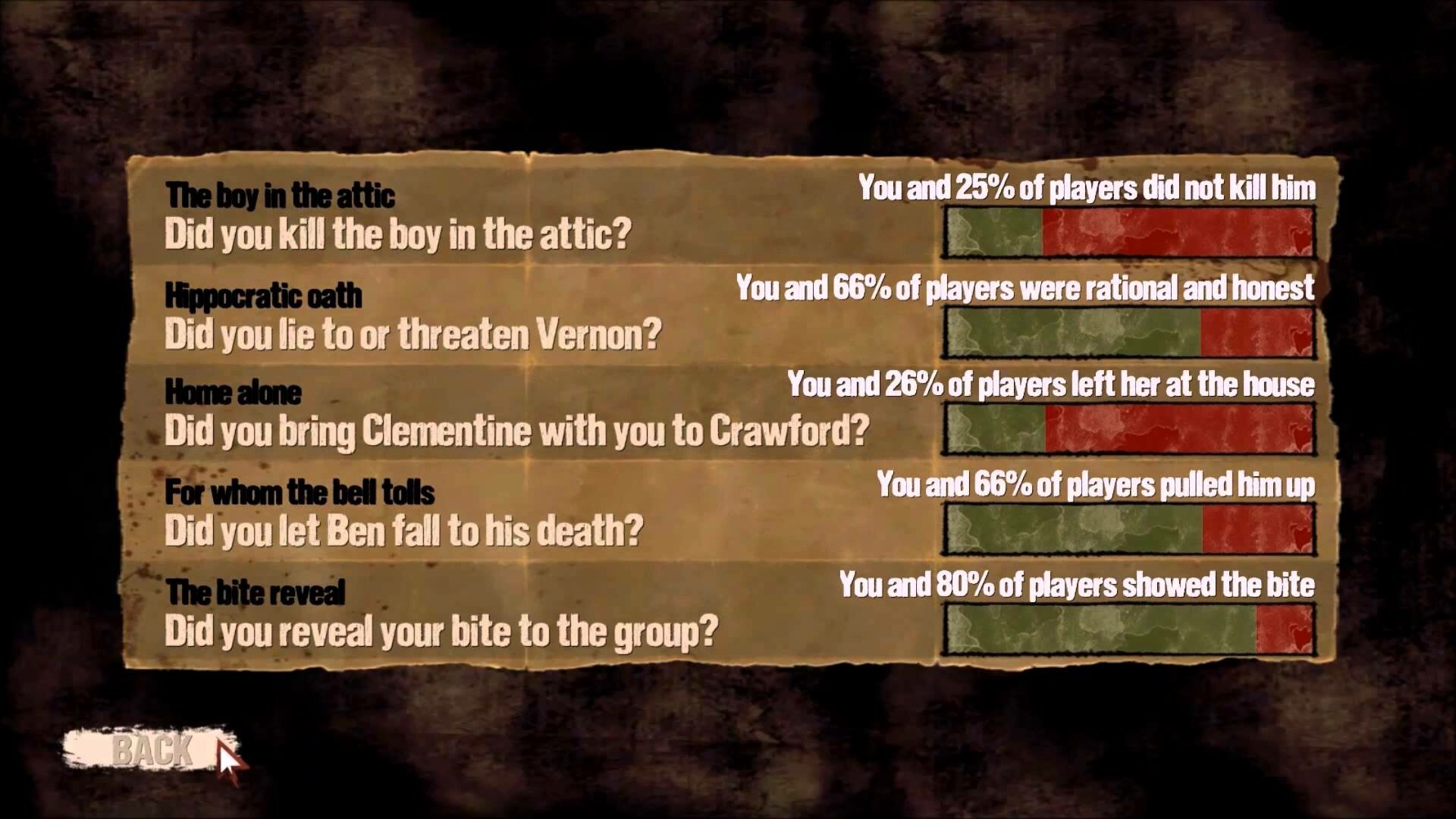
Offering choice stats lets players compare their decisions and evaluate their own ethics
But is it a game developer’s responsibility to help shape a players ethical growth? The group was divided. One belief is that we are equally responsible for everyone’s development, a social contract of sorts to get everyone on the same page, no matter how you’re connected to a person. Through that belief, developers are responsible for the ethics they display to their audience. On the the opposite end of the spectrum, another belief is that games are purely self-expression and should be taken as such, not explicitly as a statement piece. It’s the responsibility of the player and their family to develop strong ethics. Others viewed it as impossible because no one follows the same personal code; what one finds acceptable, another may find deplorable.
Overall, the group believed that all people should be responsible for their own actions. Video games aren’t an excuse for a player’s poor ethical choices, but developers should be conscious of how their games can affect players and understand possible reactions. For example, using racial stereotyping in violent games as a shortcut can trigger a “target” mentality when a player sees someone wearing cultural clothing. However, someone did point out that rates of violence are down, adding the quip, “more time killing fictional people means less time killing actual people.”
The group suggested that developers could make better ethical content decisions if they understand their own biases, consult with external groups and individuals (i.e. minority or advocacy groups) during development, and conduct diverse playtesting to shape a median experience. Even the most ethically conscious developer may be informed of a misstep or unexpected consequence after launch. The creator of Flappy Bird was told that his game was so addictive that it was ruining players’ lives, and briefly removed it from stores. Reactions to these situations can be just as important as the choices during development.

Pictured: The Ruiner of Lives
After discussing game content, we shifted to business ethics. The group agreed that game developers and their publishers should follow standard ethics, including employee protections, law adherence, and treating all people with respect. Going against the socially accepted standards risk negative press and boycotting.
Specific business issues the group addressed included “crunch time” and unfulfilled promises. The group agreed that the practice of crunch time, long hours leading into a game release, needs to be eliminated. It burns out employees and is detrimental to the industry, leaving the average career at only 5 years. While only a couple attendees had first hand experience with crunch time, many have felt the sting of unfulfilled promises. While we don’t think these were malicious, more a reflection of project constraints, we think everyone can do more to create realistic expectations. Developers can clarify when they discuss hopeful features, producers can outline acceptable discussion points, and consumers can research the actual game specs or check out online reviews.
Finally, our group had a few additional suggestions for everyone when it comes to ethical and games. Ethics classes should become more available generally, and even required for those in higher industry positions. As a consumer, if you don’t support the company’s choices, don’t buy their products. Let your friends and family know too, so they can choose.


